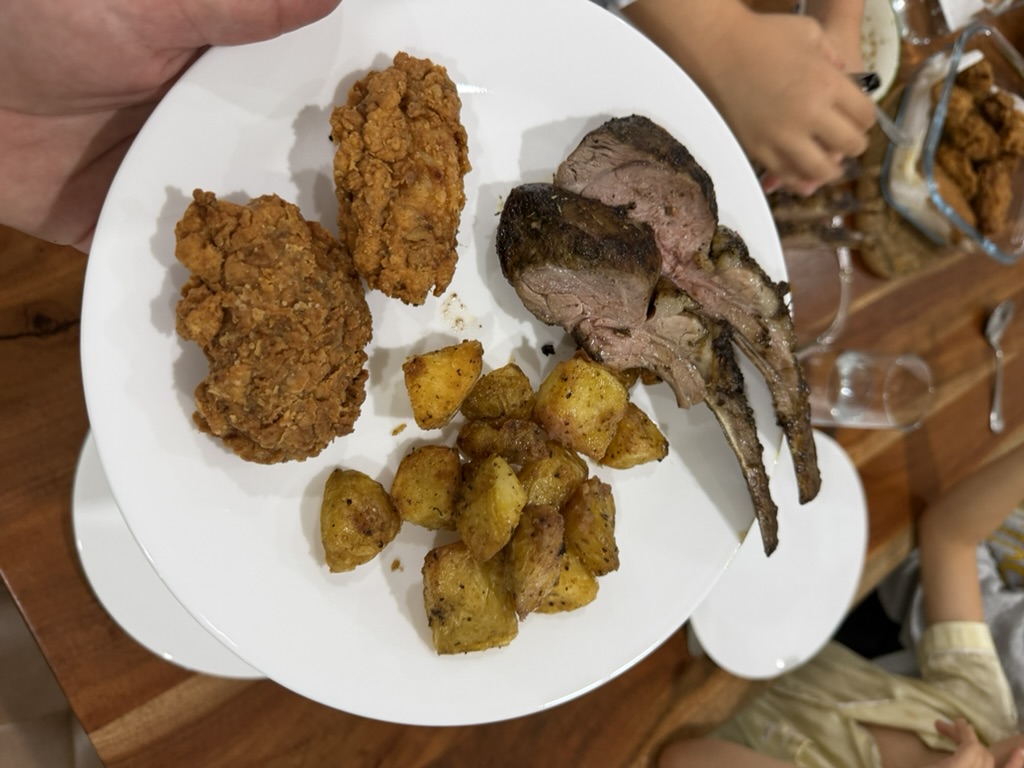
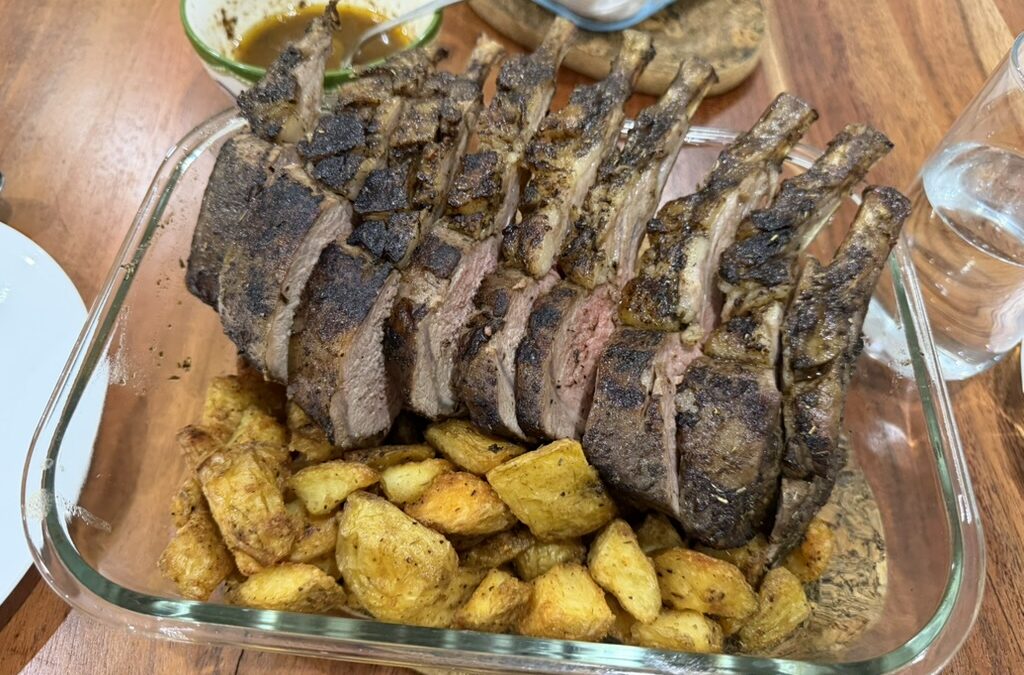
Our overnight dry-brined rack of lamb, roasted with garlic and herbs and finished with a quick tallow sear.
Recipe by Daniel
Ingredients
- 1 large rack of lamb
- Salt, approximately 1% of the meat’s weight for the dry brine
- 1 tbsp olive oil
- 1½ tsp garlic powder
- 1½ tsp Italian herb blend
- 1 tsp black pepper
- ½–1 tsp beef tallow, for the optional final sear
Method
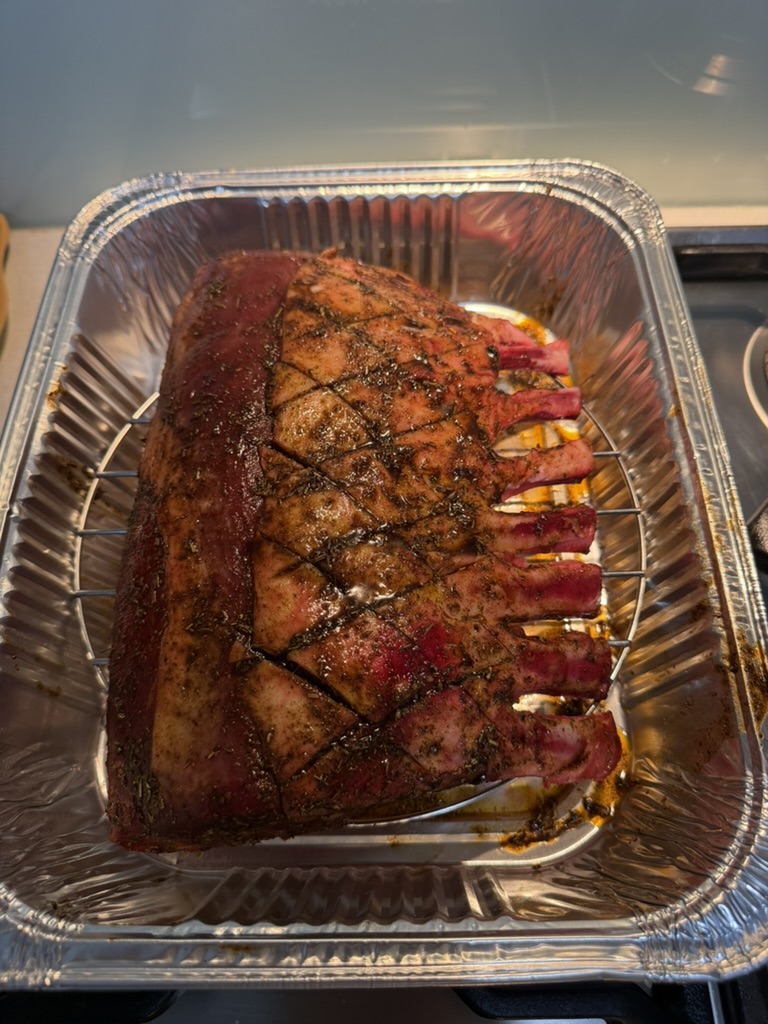
- The day before, salt the lamb and place uncovered on a wire rack in the refrigerator overnight.
- Mix olive oil, garlic powder, Italian herbs and pepper. Rub over the meat and scored fat cap. Do not add more salt after dry-brining.
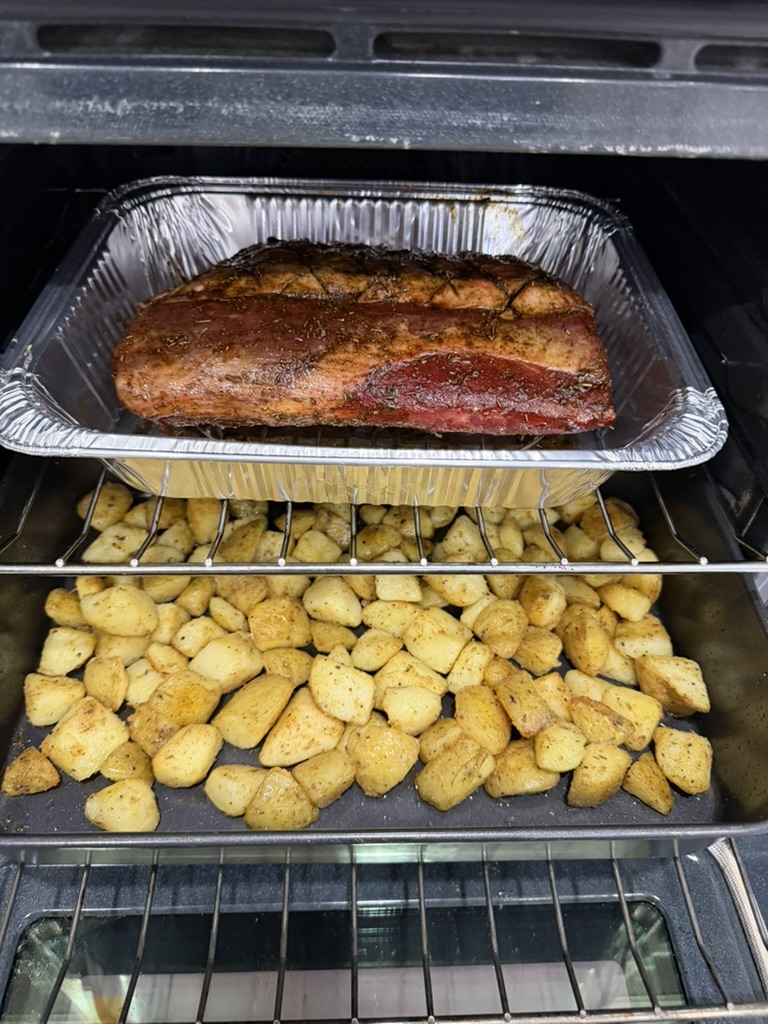
- Give the roast potatoes a 25-minute head start at 200°C fan. Reduce the oven to 180°C fan and add the lamb, fat-side up and uncovered, on a rack with a tray beneath to catch the juices.
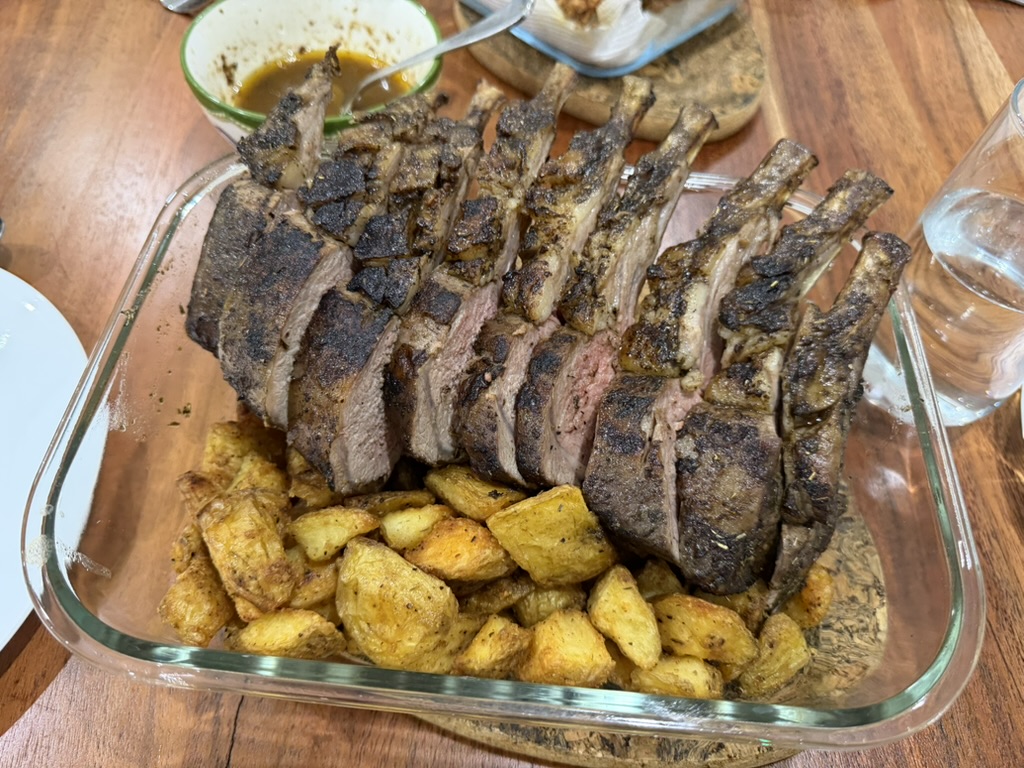
- Begin checking the centre with a thermometer after about 25 minutes. Daniel’s rack came out at 57°C, giving a pink centre after resting; cooking time varies with the size of the rack. Choose the level of doneness appropriate for your diners.
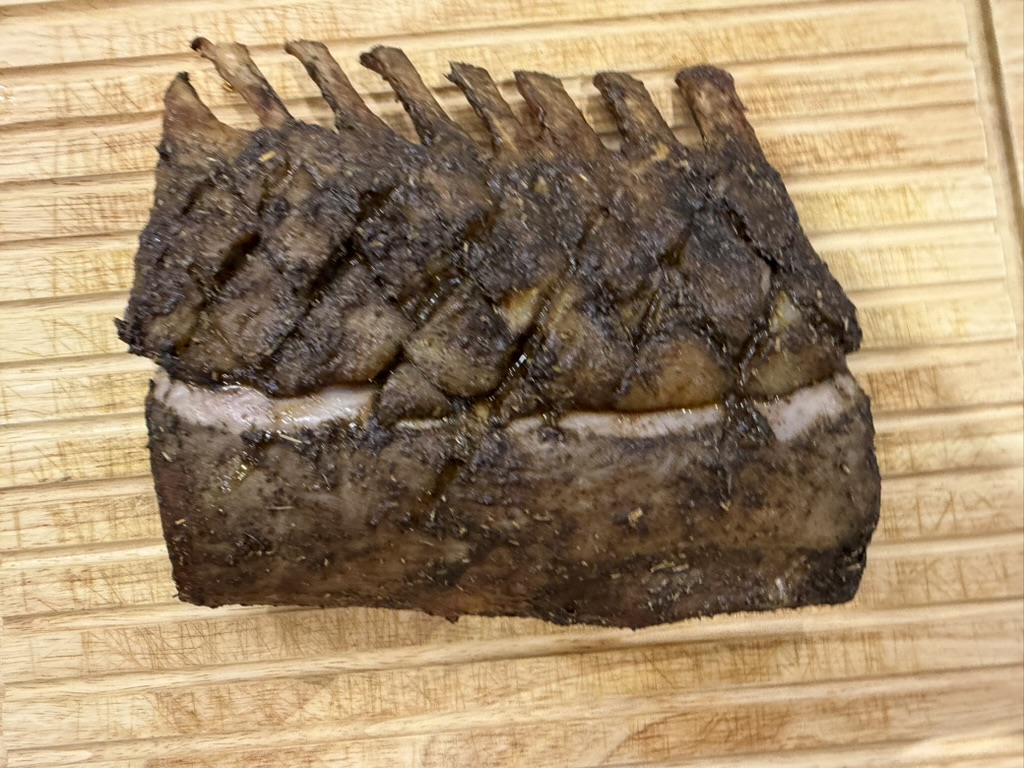
- Rest loosely tented with foil for 15–20 minutes. Save the tray and resting juices for the jus.
- For an optional quick finish, heat a heavy pan until very hot and add the tallow. Sear the fat cap for 45–60 seconds and the meaty sides for 20–30 seconds each. Do not sear the cut ends.
- Rest another 3–5 minutes, then slice between the ribs.
Kitchen notes
The finished seasoning contains no Dijon or mustard powder. The tallow sear is brief because the lamb is already cooked.
From preparation to the table
Original photographs from our family cooking. Where the recipe is labelled as a new version, these earlier photographs record the meal and may show variations rather than every exact ingredient or step above.